
Special Session: From Industrial Internet of Things to Embodied Intelligence: Enabling Autonomous Perception, Cognition, and Decision-Making Evolution in Smart Manufacturing
As the digital foundation of smart manufacturing, the Industrial Internet of Things (IIoT) establishes the infrastructure for ubiquitous sensing, massive connectivity, and data fusion. Embodied intelligence, in turn, represents a paradigm shift in intelligent systems—from “perception and connectivity” to “physical cognition.” This special session focuses on the core scientific problems and technological pathways underlying the deep integration of these two domains, systematically exploring the evolutionary logic from IIoT to embodied intelligence: specifically, how to leverage the sensing and communication capabilities of IIoT to empower industrial agents with autonomous perception, contextual cognition, and closed-loop decision-making in complex manufacturing environments. This session will feature cutting-edge research directions, including multimodal embodied perception and fusion, industrial knowledge graphs and embodied reasoning, real-time decision-making enabled by cloud-edge-end fusion networks, and efficient data processing driven by deep compressive sensing. We cordially invite scholars and engineers from relevant fields to contribute their work, jointly exploring theoretical frameworks and key technologies that integrate perception, cognition, and decision-making, thereby advancing smart manufacturing from interconnected automation toward cognitive autonomy.
Related Topics for this Session:
-
* Multimodal Embodied Perception and Fusion for Industrial Scenarios
* Knowledge Distillation and Quantization of VLA Models for Embodied Tasks
* Industrial Knowledge Graphs and Embodied Reasoning
* Cloud-Edge-End Fusion Computing and Task Scheduling
* Integrated Design and Collaborative Optimization of Communication, Sensing, and Computing
* Vision-Guided Intelligent Inspection and Predictive Maintenance
* Multimodal Perception Fusion and Scene Understanding for Industrial Agents
* Industrial Deterministic Networking and Real-Time Communication
* Data Transmission and Storage Optimization Based on Deep Compressive Sensing
-
* Brain-Computer Interface and Computational Neuroscience
Submit Method:
1, submit it via the link: http://confsys.iconf.org/submission/iccia2026 (after entering the link, click on the corresponding topic)
2, send your manuscript to iccia@zhconf.ac.cn with subject "Submit+Special Session-1+Paper Title".
Short Biography of Organizers & Chairs
|
Prof. Shi Bai, Shenyang University of Technology, China
Shi Bai, born in 1985, holds a Doctor of Engineering degree. He is a specially-appointed professor and doctoral supervisor under the "Xiangyuan Scholar" program, a leading talent in Shenyang, and a young top-notch talent under the "Xingliao Talent Program". He is also the director of the Liaoning Provincial Key Laboratory of Magnetic Medical Detection and Treatment Technology Innovation Center. In 2016, he received his Doctor of Engineering degree from Kyushu University in Japan. He previously worked at the Tokyo headquarters of Hitachi Group, leading multinational research and development projects. In 2019, he returned to China to teach and founded Liaoning Jiayin Medical Technology Co., Ltd. He concurrently serves as a council member and committee chairperson or vice-chairperson in multiple domestic and international academic societies, as well as a research and development director in several innovative enterprises and a visiting mentor at other universities. His research focuses on advanced magnetic medical diagnostic and therapeutic instruments and precision non-destructive testing technology. His team is at the forefront of international research in the field of magnetic particle imaging. He has led over ten national and provincial-level projects, and his team was selected for the first batch of "Bring Soil and Transplant" talent special projects in the province. He has published over 30 SCI/EI papers and applied for more than 20 domestic and foreign invention patents. He has received the Hitachi Group's Special Technical Award and the Gold Award of the Shenyang Overseas Talent Innovation and Entrepreneurship Competition. He has guided students to win numerous national and provincial-level discipline competition awards. He teaches courses such as "Advanced Electronic Circuits". |

 |
Assoc. Prof. Anying Chai, Shenyang University of Technology, China
Anying Chai is currently an Associate Professor in the School of Information Science and Engineering at Shenyang University of Technology. He received his Ph.D. in Computer Application Technology from the University of Chinese Academy of Sciences in 2022. Since 2024, he has served as Associate Chair of the Department of Computer Science and Technology. He also holds the position of Academic Secretary of CCF YOCSEF Shenyang. His research interests include the Industrial Internet of Things (IIoT), edge computing, machine vision, and artificial intelligence. He has led and participated in multiple national and provincial research projects, and has published 34 academic papers, filed 15 invention patents, authored one monograph, and co-edited one white paper in the field of IIoT. He serves as a Young Editorial Board Member for the Journal of Chinese Mini-Micro Computer Systems. He was the Executive Chair of a special session at ICCC, for which he received the Best Organization Award in 2025. He also serves as a reviewer for several top-tier international journals, including IEEE Transactions on Consumer Electronics, IEEE Internet of Things Journal, and Ad Hoc Networks. |
 |
Assoc. Prof. Ping Huang, Shenyang University of Technology, China
Ping Huang, a member of the Communist Party of China, holds a Doctor of Engineering degree. He is an associate professor and a doctoral supervisor. Currently, he is a full-time teacher in the Measurement and Control Technology and Instrumentation Department of the Information Science and Engineering College of Shenyang University of Technology. He also holds several academic positions, including a senior engineer for professional level evaluation of the Chinese Instrumentation Society, a member of the Electromagnetic Committee of the Non-Destructive Testing Branch of the Chinese Mechanical Engineering Society, and a member of the Electromagnetic Sensing Intelligent Health Monitoring Special Committee of the Equipment Structural Health Monitoring and Early Warning Branch of the Chinese Instrumentation Society. He has been dedicated to research in fields such as electromagnetic non-destructive testing technology and related theories, precise measurement and control technology, embedded system principles and applications. In recent years, he has led over 10 scientific research projects, including 6 enterprise-related projects and 2 technology transformation projects. He has published over 20 academic papers in SCI, EI, and Chinese core journals, obtained or applied over 20 national patents, and participated in the drafting of 1 national standard for non-destructive testing instruments of the National Testing Machine Standardization Technical Committee. In terms of talent cultivation, he has guided students to win 2 national silver awards and 3 bronze awards in the China International University Students' Innovation Competition, and has continuously guided the National Robocon Robotics Competition with 5 national first prizes for three consecutive years. He has also led 4 national-level and 5 provincial-level large-scale innovation projects, and has guided students to win over 20 provincial-level science and technology competition awards. |
 |
Assoc. Prof. Enqiu He, Shenyang University of Technology, China
Enqiu He is currently an Associate Professor at the School of Chemical Engineering Equipment, Shenyang University of Technology. He obtained his PhD in Mechanical Design and Theory from Shenyang University of Technology in 2018. His research interests include mechanical manufacturing, intelligent manufacturing, metal cutting processes and polymer materials. He has published 49 SCI-indexed papers in these fields, with a combined impact factor exceeding 100. Furthermore, he has led and participated in six provincial-level key research projects, securing three invention patents and nearly 30 Class II intellectual property rights. He has received numerous honours, including the ‘2023 Second Prize for Scientific and Technological Progress of Liaoning Province’ and the ‘2024 First Prize for Academic Achievements in Natural Sciences of Liaoning Province’. He has been appointed as the leader of a science and technology innovation team under the ‘Xingliao Talents Programme’ and has been elected as a member of the China Association of Young Scientists and Technologists. |
 |
Assoc. Prof. Jichi Chen, Shenyang University of Technology, China
Dr. Chen Jichi holds a Ph.D. in Mechatronic Engineering from Northeastern University. He serves as an Associate Professor, Postdoctoral Researcher, and Doctoral Supervisor; he has been recognized as a "Top-tier Talent" in Shenyang City and a "Young Xiangyuan Scholar" at Shenyang University of Technology. His research focuses on human-computer interaction, brain-computer interfaces, and the development of advanced driver-assistance systems. Dr. Chen has led numerous research projects, including grants from the National Natural Science Foundation of China (General Program and Young Scientists Fund) and the China Postdoctoral Science Foundation (General Program). As the first author, he has published over 30 academic papers in high-impact journals such as CHAOS, ESWA, ASOC, INS, and BSPC; additionally, he has authored two academic monographs and holds 10 authorized invention patents. His research achievements have earned him the First Prize in Natural Science Academic Achievements from Liaoning Province (ranked 1st of 3 contributors) and the Third Prize in Natural Science Academic Achievements from Shenyang City (ranked 1st of 3 contributors). Furthermore, he serves as a peer reviewer for the National Natural Science Foundation of China and as a Young Editorial Board Member for the journal JRST. |
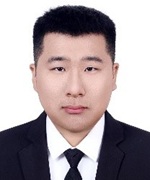 |
Dr. Fuyin Zheng, Shenyang University of Technology, China
Zheng Fuyin is currently a lecturer at the School of Information Science and Engineering, Shenyang University of Technology. He obtained his PhD in Instrument Science and Technology from Shenyang University of Technology in 2022. Since 2022, he has served as a full-time lecturer in the Electronic and Information Engineering programme at the School of Information Science and Engineering, Shenyang University of Technology, and as a council member of the Advanced Medical-Engineering Integration Technology Committee of the Liaoning Society of Cell Biology. His primary research interests lie in electromagnetic non-destructive testing technology and related theories, as well as precision measurement and control technology. In recent years, he has published over 10 academic papers in journals indexed by SCI, EI and the Chinese Core Journal List. He has been granted or has applications pending for six national invention patents and holds one authorised software copyright. He has led one project funded by the Central Government Guidance Fund for Local Research and one industry-sponsored project, and has participated as a key member in multiple initiatives including the National Key Research and Development Programme, General Projects of the National Natural Science Foundation of China, and the Liaoning Provincial Natural Science Foundation. He has guided students to achieve outstanding results in national and provincial competitions, including the China International ‘Internet Plus’ Competition, the Undergraduate Innovation and Entrepreneurship Training Programme, the National University Robot Competition, and the National University Electronic Design Contest. |